
What If You Panicked? Legal Defenses for Hit and Run Drivers
April 3, 2026
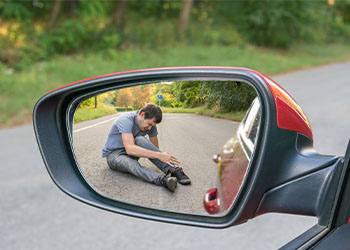 After a collision, your body can go into a fight-or-flight response. Your heart races, your mind scrambles, and you might make a split-second choice to drive away because you panicked. In California, though, leaving the scene can turn a stressful moment into a criminal case, even when you didn’t intend to hurt anyone.
Roth Legal, A Professional Law Corporation, is a California law firm that helps people respond to hit-and-run allegations with clear, practical legal guidance. This firm is located in Modesto, California, and they serve clients in Stockton, Manteca, Merced, and throughout California. Contact the firm today.
Hit-and-Run Laws in California
California hit-and-run laws can apply to a wide range of scenarios, from a low-speed parking-lot bump to a crash that injures someone. The legal duty is to stop, exchange identifying information, and handle the immediate responsibilities that follow a collision.
The timing and your actions in the minutes after the impact can shape how the case is filed. Many cases fall into one of two broad charge categories, and the potential exposure often depends on what happened in the crash itself:
Property damage collisions: These cases generally involve damage to a car, fence, mailbox, or other property, and the dispute often centers on whether the driver stopped and provided the required information.
Injury or death collisions: These allegations involve claimed physical harm to another person, and they’re typically treated more seriously because the stakes and potential penalties are higher.
Because charging decisions can turn on details like injury claims, damage evidence, and witness statements, the next step is often looking at why a person left and what the state says it can prove about their mindset at the time.
What California Law Requires After a Collision
California law focuses on a driver’s duties after a collision, not on whether the crash itself was intentional. In many cases, the case starts with a simple question: Did the driver stop and provide the required information and assistance? That is why even a minor incident can become serious if the state thinks the driver left without meeting those obligations.
The core duties after a collision generally include the following actions, and these are the kinds of duties prosecutors and police reports tend to focus on first:
Stop at or near the scene: Leaving the immediate area, even briefly, can be treated as failing to stop when the state believes it interfered with identification and information exchange.
Provide identifying information: This typically involves sharing your name, address, and vehicle information with the other driver or property owner when required.
Offer reasonable help when someone is hurt: In an injury situation, the legal duty can include calling for help or taking reasonable steps to get medical assistance.
Report when required: Depending on the facts, reporting obligations may arise through law enforcement contact and related reporting rules.
How those duties apply in a specific case depends on what happened, what you knew, and what you did next, which leads directly into what the state has to prove to get a conviction.
What the Prosecution Must Prove
A hit-and-run charge isn’t just about the aftermath; it’s also about proof. The prosecution still has to show specific legal elements, and that is where defenses are built. If the state can’t prove an element beyond a reasonable doubt, the charge can fail even when a collision occurred.
In general terms, the case often turns on whether the prosecution can prove you were the driver, that you were involved in a collision that triggered legal duties, and that you didn’t meet those duties. Evidence issues like identity, timing, and what you understood in the moment can be central. Those proof questions also shape how a panic response fits into a defense theory.
Evidence That Often Shapes the Case
Hit-and-run cases are frequently built on a mix of physical evidence and human recollection. Sometimes the evidence is clear and consistent, and sometimes it has gaps that create reasonable doubt. A careful review often focuses on where the story is solid, where it’s based on assumptions, and where it depends on inference.
The types of evidence that commonly come up in these cases include the following, and each category can create both risks and opportunities for a defense:
Surveillance or traffic video: Footage shows a vehicle leaving, but it may not clearly show the driver’s identity, the moment of contact, or what happened immediately before and after.
Witness statements: People describe a car, but details can change over time, and witnesses may fill in gaps without realizing it.
Vehicle damage patterns: Damage location, height, paint transfer, and repair history may be used to argue involvement, but those inferences can be disputed.
License plate reports: A plate number can be misread, partially captured, or incorrectly recalled, especially in low light or fast-moving situations.
Phone and location data claims: These issues arise in some cases, but what they actually reveal can be narrower than the prosecution suggests.
Potential Penalties
A hit-and-run case can involve more than one legal problem. Depending on the facts, the prosecution adds charges tied to driving behavior, injury allegations, or other conduct connected to the collision. Separate from the criminal case, there are also insurance, licensing, or civil issues that move on a different timeline.
The consequences can vary based on whether the case is treated as a property damage matter or an injury matter, as well as your record and the court’s orders. Outcomes involve fines, probation terms, restitution orders, custody or driving restrictions, or other conditions set by the court.
Trusted Criminal Defense Legal Services
If you’re facing hit-and-run allegations after a panic-driven decision, getting legal advice early can help you understand your options and reduce avoidable missteps. Roth Legal, A Professional Law Corporation, serves clients in Modesto, California, as well as Stockton, Manteca, Merced, and throughout California. Consult an experienced attorney at the firm to discuss the charge, the evidence, and the defenses that apply based on your facts.