
Constructive Possession: Can You Be Charged for Drugs Found in Your Friend's Car?
Oct. 21, 2026
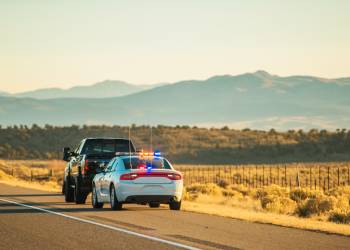 Police stopped your friend's car, found drugs in the center console, and arrested everyone inside, including you. You can be charged in that situation. California law does not require drugs to be in your hand or pocket.
Prosecutors can rely on "constructive possession," but being a passenger is not enough to convict you. The state still has to prove that you knew the drugs were there and that you knew what they were.
At Roth Legal, A Professional Law Corporation, we defend people in California whose drug charges depend on where they were sitting, not what they actually had. If a car search led to your arrest, talk with us before you discuss the case with anyone else. That includes the friend who owns the car. An early conversation can protect defenses you may not know you have. Schedule a free consultation today.
What Constructive Possession Means in California
Constructive possession is possession without physical contact. Under California's official jury instruction for drug possession, you can possess something you never touched if you had control over it or the right to control it, either personally or through someone else.
The same instruction tells jurors that more than one person can possess something at the same time. This is how a driver and a passenger can both face charges over a single bag. It also means that "they weren't mine" does not automatically end the case. Ownership and possession are separate questions, and the prosecution only has to prove possession.
What Prosecutors Must Prove
To convict you of simple possession, the prosecution must prove four things: that you possessed a controlled substance, that you knew it was present, that you knew it was a controlled substance, and that the amount was usable. A usable amount is enough for someone to use. Useless traces don't count, but the amount doesn't have to be strong enough to affect anyone. In passenger cases, knowledge is usually the central dispute. It isn't enough for the state to show that drugs were somewhere in the vehicle.
Why Sitting Near the Drugs Isn't Enough
California courts have long held that the following are not enough, on their own, to prove possession:
being near the drugs
being present where they are found
being associated with the person who controls them
This rule matters because cars are shared spaces. Suppose you accepted a ride home from work and never opened the glove box. Your situation is very different from that of someone who handled the contents. To convict you, the prosecution needs additional evidence that connects you to the drugs.
Evidence That Can Connect a Passenger to Drugs
Prosecutors usually try to close that gap with circumstantial evidence. Common examples include:
Drugs in plain view or within easy reach, such as at your feet or in the passenger door pocket
Your wallet, phone, or bag found next to the drugs, or the drugs found inside your belongings
Cash, scales, or paraphernalia found on you
Text messages that discuss buying, sharing, or selling
Statements you made to officers at the scene
Statements are often the strongest evidence in these cases. Many passengers believe they are clearing themselves when they say something like "I knew he had it, but it's his." That sentence hands the state the knowledge element it would otherwise struggle to prove.
Because these cases often turn on small factual details, effective drug crimes defense starts with a close look at a few questions: where exactly the drugs were, who had access to that space, and what was said and how it was recorded.
Can a Passenger Challenge the Car Search?
Often, yes, at least in part. The U.S. Supreme Court has held that a passenger is seized during a traffic stop just as the driver is. That means a passenger may challenge whether the stop itself was lawful. If the stop was unconstitutional, a court may suppress the evidence that followed.
Challenging the search of the car itself is harder. A passenger generally cannot contest a search of areas of a vehicle where they had no reasonable expectation of privacy. A passenger can usually challenge a search of their own belongings, such as a backpack or purse. Whether a challenge is available depends on the specific facts, so it's worth examining the details of the stop early.
Penalties If You're Convicted
Simple possession of most controlled substances in California is usually charged as a misdemeanor, with a potential sentence of up to one year in county jail. The exposure can grow depending on the circumstances. Quantity, packaging, or cash can lead prosecutors to allege possession for sale, and a firearm in the car can bring more serious charges.
Prior record matters too. Proposition 36 took effect in December 2024. Since then, prosecutors may file a treatment-mandated felony for possession of certain hard drugs when the person has two or more prior convictions for specified drug offenses. A defendant charged under this law may choose a court-approved treatment program instead of jail or prison, and completing treatment means the person is not convicted of the offense.
If federal agents were involved, or the case grew out of a larger investigation, the charges may fall under federal law. Federal law has its own possession rules and sentencing structure.
Getting Help With a Passenger Possession Charge in the Central Valley
In a constructive possession case, the prosecution's hardest task is usually proving what you knew, and that is where we focus. Our attorney Ryan Roth will go through the police report, the body camera footage, and the layout of the vehicle to decide whether the evidence actually connects you to the drugs or only places you near them. He will also assess whether the traffic stop and search were lawful and whether you properly waived your rights.
Clients in Modesto, Stockton, Manteca, and Merced work directly with Ryan. We take on the burden of the court process so you can focus on work, family, and everything else a charge puts at risk. If you were arrested after drugs turned up in someone else's car, our Modesto criminal defense attorney can help you understand the evidence and your options before your first court date. Call today to schedule a free consultation.